What Information Should Be Included on a Candle Box Label?
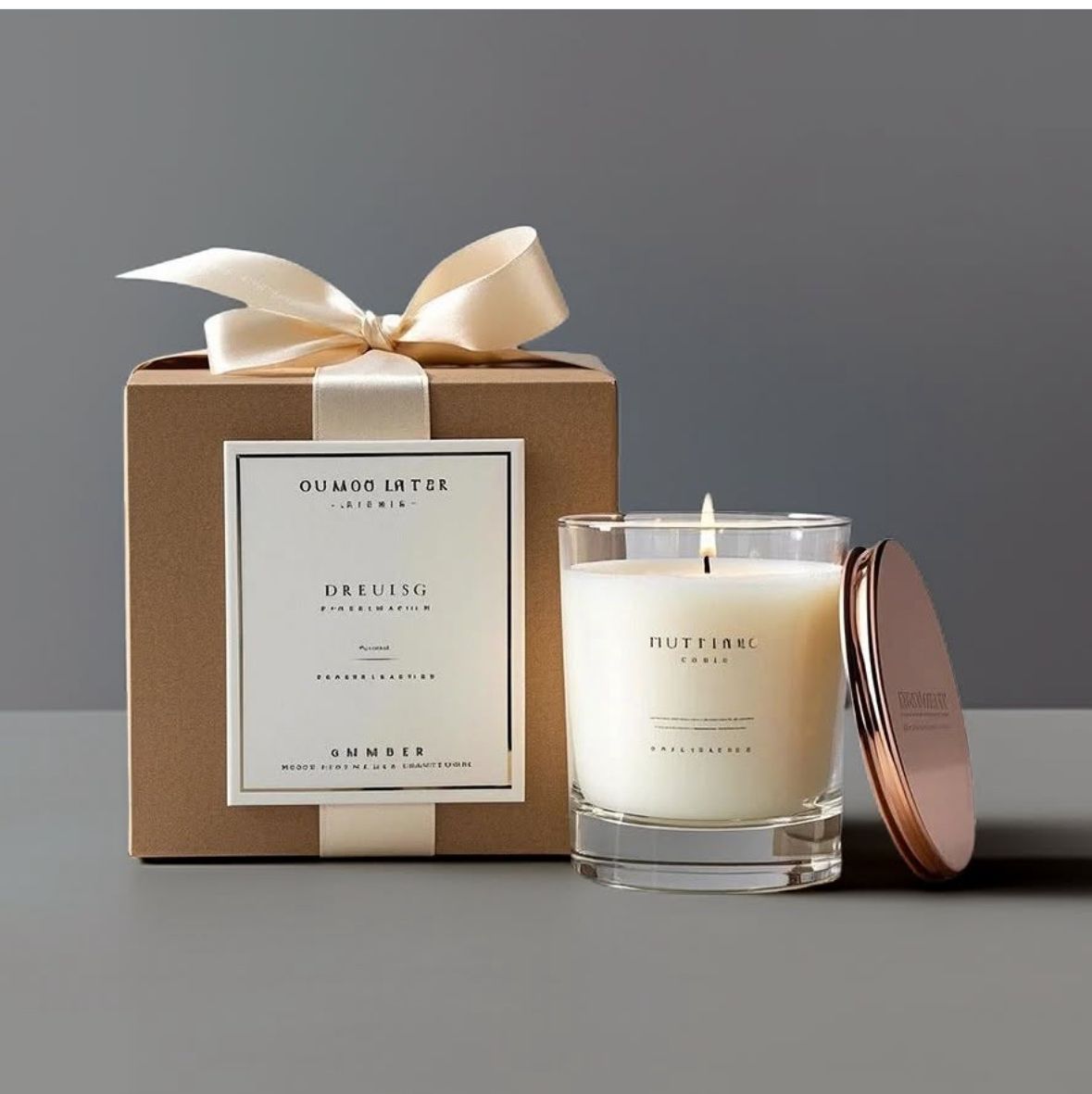
Pick up any candle in a shop and watch what people do with it. They smell it, turn the box over, and read the back. That label is doing two jobs at once: helping someone decide whether to buy, and covering you if something goes wrong later. So it’s worth getting right.
Here’s what actually belongs on it.
Say what the product is
It sounds obvious, but plenty of boxes skip it. If it’s a soy wax candle, say “Soy Wax Candle” somewhere plain. “Midnight Cedar” is a lovely name, but it doesn’t tell a shopper or a regulator what’s in the box. In the US, the Fair Packaging and Labeling Act asks for three things on the outer packaging: what the product is, how much of it there is (net weight), and who made it.
Get the net weight right
This is where new makers trip up most. Net weight is the wax, fragrance and dye. It does not include the jar, the wick or the box. A lot of people weigh the finished candle in its jar and print that number, and that doesn’t meet the requirement.
The fix is easy. Weigh the empty jar, pour, weigh again, and subtract. Print the result in ounces and grams, like “8.5 oz (241 g)”. A few candle types are exempt from net quantity labeling, so if you make tapers or novelty shapes, check the federal exemptions before assuming you need it.
Put your name and location on it
Customers want to know who’s behind the product, and if they have a problem, they need a way to find you. Your business name and place of business covers the manufacturer identification rule. If the front of the box is crowded, this detail can go on the warning label instead, which the FPLA allows.
Don’t skip the fire warning
Most makers follow ASTM F2058 for this. It’s a voluntary standard, but retailers expect it, and if a customer ever has a fire, a missing warning is the first thing anyone will point to. The warning has to be visible at the point of sale and can’t be covered up. In the text-only version, it starts with the safety alert symbol, then the word WARNING in bold capitals.
The content is simple: never leave a burning candle unattended, keep it away from anything that can catch fire, and keep it away from kids and pets. Plenty of makers also add a line about trimming the wick before each burn.
Tell people what’s in it
People read ingredient lists on candles now the way they read them on food. Mention the wax (soy, coconut, paraffin, beeswax, or a blend), the wick type, and the fragrance. Fragrance notes like bergamot, tonka bean and sandalwood sell candles, so give them room.
A word of caution on claims. Non-toxic,clean burning and all natural are tempting, but if you can’t back them up, leave them off. They invite trouble.
Add burn time and a few care tips
“Burns up to 45 hours” helps shoppers compare, but only print a number you’ve actually tested. A short care note helps too. Letting the wax melt across the whole surface on the first burn and trimming the wick keeps the candle from tunneling, which means fewer disappointed customers and fewer bad reviews.
Use a batch number
Nobody gets excited about a batch code, but it’s one of the most useful things on the box. If a customer reports a problem, you can trace it to a specific pour and a specific fragrance oil lot. That makes quality control and, if it ever comes to it, a recall much less painful.
Check the rules for where you sell
The label you need depends on your market.
In the US, California’s Proposition 65 matters if you ship there, importers need to think about country-of-origin marking, and the CPSC has a mandatory ban on lead-core wicks. In the EU and UK, scented candles count as chemical mixtures, so CLP labeling can apply. When a jar sits inside a box, the CLP label may be needed on both the inner and outer packaging, and a 2024 amendment tightened the rules on text size and legibility. Canada’s rules are close to the US ones, with a bilingual requirement.
These rules change, so confirm the current version with the regulator or a compliance specialist before you send anything to print.
Make it readable
A label can be fully compliant and still be useless if nobody can read it. Keep the front for the brand story and put the facts on the back or side. Use real contrast for the warning text, not light grey on cream. Put legal text on a flat panel rather than wrapping it around an edge. And test a printed proof on your actual box material, because kraft, matte and foil all behave differently, and something that looks crisp on screen can fade on textured stock.
This is where good packaging helps. Custom Candle Gift Boxes Packaging gives you a front panel for the design and a clean back or side panel that can hold the weight, warning, ingredients and batch code without crowding the artwork.
Before you print
Run through it once more: product name, net weight in ounces and grams, your business name and location, the fire warning, wax and fragrance details, burn time, batch number, and any market-specific marks. Then read the proof out loud, slowly. Typos in a safety warning are more common than you’d think.
A good label tells customers you took the product seriously. Do it properly and it quietly supports the brand every time someone turns the box over.